Is Personal Training Worth It? What You Actually Get for Your Money (and When It's Not Worth It)
Personal training is worth it when you pay for coaching, accountability and a plan built around your body, and it is not worth it when you already train well on your own or want a trainer to simply count your reps. The value sits in the decisions the trainer makes for you, not in the hour you spend in the gym. If those decisions save you months of wasted effort or a painful setback, the price pays for itself. If they do not, you are renting a spotter.
This article skips the price list. It looks at what each session buys, who gets a strong return, and who should keep their money.
What does your money actually buy?
You buy four things. A plan, correct technique, a schedule you keep, and someone who adjusts the plan when your body or life changes. Time on the gym floor is only the delivery method.
A good personal trainer spends most of their value outside the session. They write the program, track what you lifted last week, and decide what you lift next. You see the hour. You do not see the planning behind it.
When we compare two people with the same goal, the difference is rarely effort. It is direction. One of my clients trained four days a week for a year before she came to me. She worked hard. She also did the same three weights, the same reps, every week. Her body had stopped responding months earlier. Nothing was wrong with her effort. Nobody had told her to change the load.
That is the real product. A trainer stops you from repeating a workout that no longer works.
Why does a plan matter more than the sessions?
Your body changes only when the demand on it increases over time. This is called progressive overload, and it is the engine behind almost every gain in strength training. You add a little weight, a rep or a set, and your body adapts to handle it.
Most people who train alone forget this. They pick a weight that feels fine and stay there. It feels productive because they sweat. It builds very little.
The National Academy of Sports Medicine builds its training model around this idea. Its programs move clients through stages, starting with stability and control before adding load and power. You do not need that exact system. You do need some system, and a trainer carries it in their head so you do not have to.
What I found when I tracked clients over a few months was simple. The ones who followed a written, progressing plan improved faster than the ones who showed up and picked exercises by mood. The plan did the work. The sessions made sure the plan got done.
Does a trainer really lower your injury risk?
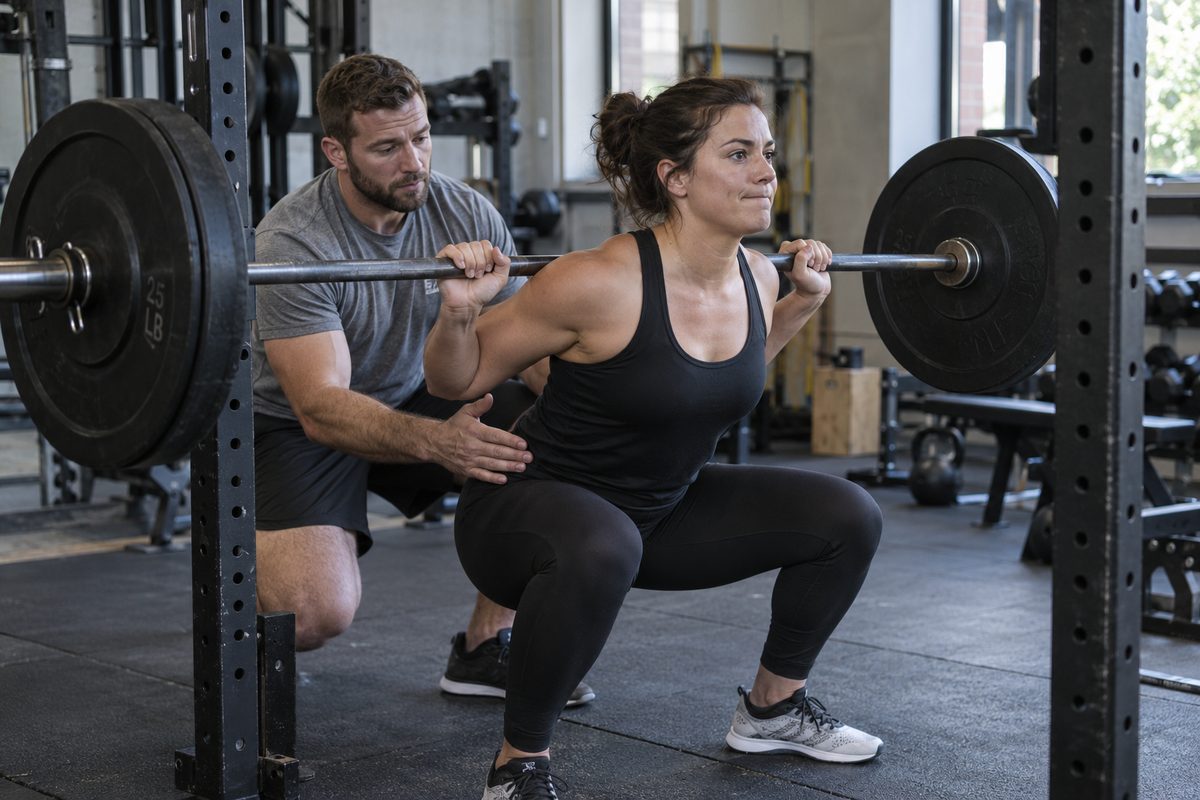
Yes, if you are new to lifting or returning after a break. Poor technique under load is the fastest route to an injury. A trainer sees your hips shift or your back round before you feel it.
I remember when one of my clients, a man in his forties, started deadlifting from a YouTube video. He felt a twinge in his lower back in week three and stopped training for a month. He came to me after that. We spent two sessions on nothing but the hip hinge. He has lifted without pain ever since.
That one month of lost training, plus the physio bill, cost more than the two sessions that fixed the problem. This is the quiet side of value. A trainer is cheap insurance against a mistake that costs far more than the fee.
The protection fades, though, once you learn the movements. By then you should need the trainer less.
Where does accountability fit in?
Accountability is the most undervalued part of the fee, and it is the reason many people get results. A booked session with a person waiting for you beats a vague plan to go later.
Here is the angle most articles miss. Accountability is not about being yelled at. It is about removing one decision. You do not ask yourself at 6 a.m. whether you feel like training. You already told someone you would be there. The decision was made days ago.
When I tried to coach a client with no fixed times, she trained twice in a month. When we locked in two morning slots, she trained eight times. Her motivation never changed. Her calendar did.
If you already train three or four times a week without fail, this part of the fee buys you nothing. Be honest about that before you pay.
How do you judge the return on investment?
Start with what you want, then price it. Your return on investment is the result you get divided by what you spend, and the result has to be something you can measure. A vague wish to get fitter cannot be priced. A specific target can.
This is where goal setting earns its place. A useful goal has a number and a date. Squat your bodyweight by March. Walk up the stairs at work without stopping. Drop two belt notches before the wedding. Once you have that, you can ask a plain question: did the sessions move me toward it?
Treat the cost as an investment in a result, not a fee for an hour. If you spend a fixed amount over three months and you hit the target, the spend worked. If you spend the same amount and have no clearer idea of where you stand, it did not.
Review it every four weeks. Ask your trainer what has changed on paper. Weights lifted, measurements taken, a test repeated. A good trainer will welcome this. A weak one will go vague.
Who gets the strongest return?
Four groups tend to get the most out of it.
First, beginners. You skip the trial and error that wastes the first six months. Second, people coming back from injury or a long layoff, who need loads set carefully. Third, people with a hard deadline who cannot afford to guess. Fourth, people who have trained for years and stalled, because an outside eye finds the flaw they cannot see.
I know this because one of my clients, a woman in her fifties, had never lifted a weight. She was scared of the gym floor. Within four months she was doing goblet squats and carrying her own shopping with ease. The gain in physical fitness mattered. The gain in confidence mattered more to her. No app could have given her that.
The pattern holds. The more uncertain you feel, the more a trainer is worth.
When is personal training not worth it?
It is not worth it in these cases, and a straight answer saves you money.
You already have a plan that works. If your lifts go up month after month and your technique is sound, a trainer adds little. A single check-in once a quarter would cover it.
You want motivation but will not do the work between sessions. One hour with a trainer cannot cancel six days of inactivity and poor sleep. I have seen clients pay for two sessions a week and change nothing else. They saw almost no change. The fee was not the problem. The other 166 hours were.
The trainer follows a script. If every client gets the same circuit and the trainer spends the hour on their phone or chatting, walk away. You are paying for attention. No attention, no value.
The budget is tight. Paying for training by cutting groceries or skipping bills defeats the purpose. A cheaper path exists. Book one session to learn the basics, then train alone with the plan you were given.
This is just based on what happened to my clients, but the ones who regretted the spend almost always fell into one of these groups.
How often should you train with a trainer?
Less often than you think. Many people assume more sessions mean more results. They do not. Past a point, you need to practice alone what you learned.
A common and effective pattern is one session a week while you learn, with two extra solo sessions on the same plan. After a few months, drop to every second week. You keep the direction and cut the cost.
I know this because one of my clients tried three sessions a week for two months. She got fit, and she also became dependent. She could not train without me. When we shifted to one session a week plus a written plan, her results held and her bill fell by two thirds.
The goal of good coaching is to make yourself less necessary over time.
How do you get full value from every session?
Arrive with a question. Ask why each exercise is in the plan. Ask what the next increase will be. Film your main lifts if your trainer allows it, and review them later.
Keep a simple log of weights and reps. Bring it to each session. This lets your trainer apply progressive overload with real numbers instead of guesses.
Say when something hurts or feels off. Do not hide it. A trainer can only protect you from an injury they know about.
Sleep and food matter as much as the session itself. Ask for basic guidance on both. A trainer who ignores them is leaving results on the table.
What should you look for before you pay?
Look for a recognised qualification, such as a certificate from a reputable body, and for a trainer who asks about your history before they hand you a program. Ask how they measure progress. Ask what happens if you stop improving.
A short trial or a first assessment lets you test the fit with little risk. If the trainer listens, explains and adjusts, you have a good sign. If they sell you a large package before they know your goal, you have a warning.
If you want to see what a tailored approach looks like locally, the team at Personal Trainer Maribyrnong offers a starting point to compare against.
What should you do next?
Decide by testing your own situation against three questions. Do I know what to do in the gym? Do I show up without help? Do I have a goal with a number on it? If you answered no to the first two, personal training is likely worth the money. If you answered yes to all, keep your cash and train alone.
Then take these steps:
- Write one goal with a number and a date.
- Book a single assessment session and ask for a written plan.
- Log every workout for four weeks.
- Review the numbers with your trainer and decide whether to continue, reduce or stop.
Judge the money by the result on paper. If the number moved, it was worth it.