Personal Trainer vs Gym Membership: Which Gets Maribyrnong Locals Results Faster?
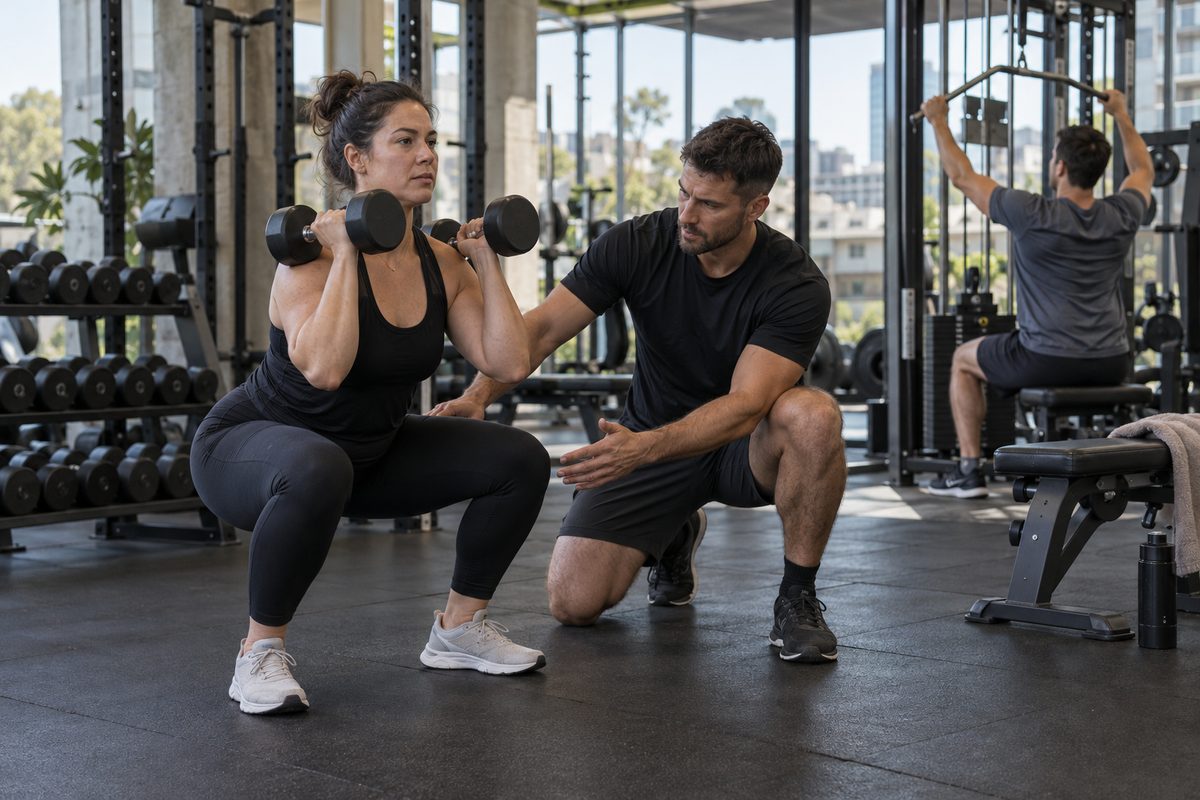
A personal trainer gets most Maribyrnong locals results faster than a gym membership alone, because a trainer fixes the two things that slow people down: a weak plan and skipped sessions. A membership gives you access to equipment. A trainer gives you a plan, a coach watching your form and a booking you will not cancel. Access is useful, but it does not move your body. Action does. This article explains why the gap exists, where a membership still wins and how to pick the right fit if you live in Maribyrnong, Victoria.
I am not going to rehash pricing here. If cost is your main question, read our guides on what a trainer charges in Maribyrnong and how chain gyms compare. This piece is about speed: which path gets you to the result sooner.
What actually decides how fast you get results?
Three factors, in this order: how often you train, how well the sessions are built and how long you keep going. Equipment sits far down the list. A full gym floor with a poor plan loses to a park and a good plan every time.
When we look at it this way, the comparison gets simple. A membership improves your access. A trainer improves your plan and your attendance. Plan and attendance drive results, so the trainer usually wins on speed.
I know this because of what I see in the first month with new clients. Most arrive with a membership they already pay for. They have used it for a few weeks, then drifted. The gym did not fail them. They had nobody to answer to and no clear next step.
Why do most gym memberships stall in the first eight weeks?
They stall because the early weeks demand decisions, and decisions wear people down. What do I train today? How heavy should this be? Is this the right machine? Each small doubt makes skipping easier.
One of my clients, a nurse who lives a few streets back from the Maribyrnong River, joined a big chain gym in January. She went four times a week for two weeks, twice a week for the next two, then stopped. She told me she spent half of every visit walking around trying to decide what to do. That is a very common pattern. She did not lack motivation. She lacked a script.
Three things usually go wrong at once:
- You repeat the same easy routine because it feels safe.
- You never write down your weights, so you cannot beat them.
- Nobody notices when you miss a week.
A trainer removes all of those problems on day one. You walk in, the session is ready and the weights are written down from last time.
How does progressive overload make the trainer faster?
Progressive overload means you gradually ask your body to do a little more over time. More weight, more reps or better control. It is the engine behind every strength and muscle gain. Without it, your body has no reason to change.
Here is the catch. Overload sounds simple, yet most people do it badly alone. They add too much weight and get hurt, or they never add any and plateau. A trainer tracks every session and adjusts the load by small, planned amounts. That steady climb is what saves you weeks.
What I found when I started logging every client session was striking. People who trained with a written progression added strength at a steady pace for months. People who trained by feel often stayed at the same weights for six to eight weeks without realising it. Same effort, slower result.
Strength training is where this gap shows most. Learning a squat, a hinge or a press with proper form takes feedback. A mirror shows you some of it. A trained eye shows you the rest. Good form lets you lift heavier safely, and heavier lifting is what builds muscle and bone.
Does a trainer change your body composition faster?
Yes, in most cases, and the reason is that body composition responds to two things working together: resistance work and consistent habits. Body composition is the split between fat and lean tissue in your body. Losing scale weight is easy. Losing fat while keeping muscle is harder, and that is the result most people actually want.
A trainer builds resistance work into your week so you hold onto muscle while fat drops. A lot of membership holders do mostly cardio, because it is the easiest thing to walk up to and start. Cardio burns energy, but without lifting you can lose muscle along with fat. The scale falls and you still feel soft.
A trainer also gives you someone to report to about food and sleep. I tell clients early: the gym session is about three hours of your week. The other 165 hours decide how fast your body composition changes. A good trainer works on those hours too, with simple, realistic habits.
Where does a gym membership beat a personal trainer?
A membership wins in four clear situations, and it is worth being honest about them.
You already know how to train. If you have lifted for years and follow a written program, a trainer adds little speed. You are the coach.
You need flexible hours. Shift workers and parents with unpredictable days cannot always commit to a fixed slot. A 24-hour gym fits around that life.
You want variety and equipment depth. Pools, saunas, group classes and a huge range of machines are things a one-to-one session may not include.
Your budget is tight. A low-cost membership costs far less per month than regular sessions. If the choice is a trainer you can afford once a month or a gym you will actually use, pick the gym and follow a simple plan.
If none of these four describes you, the trainer is usually the faster route.
What does a Maribyrnong local get that a chain gym cannot offer?
A local trainer builds your plan around your real surroundings, and Maribyrnong has plenty to work with. The Maribyrnong River Trail runs right through the area, with flat, easy kilometres for steady walking, jogging and cycling. That makes it a free, ready-made setting for aerobic exercise. A trainer can slot those outdoor blocks between your lifting days so your week feels like one plan, not two separate habits.
Aerobic exercise matters because it builds your engine. A stronger heart and lungs help you recover between sets, handle busier days and sleep better. Most people overdo it or skip it. A trainer sets the dose. Two river sessions a week at a conversational pace is plenty for most beginners.
Human body weight training also travels well. Push-ups, lunges, step-ups and planks need no machine at all. When a client gets stuck in traffic, travels for work or has a sick child at home, a ten-minute body weight circuit keeps the streak alive. A membership does not help you when you are not at the gym. A trainer gives you a plan that works anywhere.
This is also true across the wider Inner West. People here commute, juggle school runs and live near good open space. A plan that uses both the gym and the river path fits how locals actually live.
How fast can you realistically expect to see change?
Here is a realistic timeline for someone training two to three times a week with a trainer and sleeping reasonably well.
- Weeks 1 to 2: better form, less soreness and more energy. The scale rarely moves yet.
- Weeks 3 to 6: strength climbs fast. You lift more than on day one, and clothes begin to fit differently.
- Weeks 8 to 12: visible changes in body composition, better stamina and a routine that feels normal.
People who go it with a membership alone can follow the same curve, but fewer do. In my experience, the difference is not talent. It is that the trainer-led group still shows up in week five, when the novelty is gone.
Physical fitness is built by repetition, and repetition needs a reason to turn up. A booked 6:30 am session with a person waiting for you is a strong reason. An unused membership card in your wallet is not.
Why does accountability matter more than people admit?
Because willpower is unreliable and appointments are not. When you pay a trainer for a slot, a missed session costs you money and lets down a real person. That small pressure beats a good intention on a cold morning.
One client of mine, a tradesman from the area, told me he had joined three gyms in five years and never lasted past two months. He began training with me twice a week, mostly because he did not want to cancel on short notice. A year later he has not missed a month. He now trains on his own on a third day too. The structure came first. The habit followed.
That is the angle many comparison articles miss. A trainer is not only teaching you exercises. A trainer is building a routine until it can stand up without help. After that, you can cut sessions back and keep the gains.
Can you use both and get the best of each?
Yes, and it is often the fastest setup for people with a bit of budget. Use a trainer for the hard part: program design, technique and progression. Then use your membership or the river path for the extra sessions that the program calls for.
A simple version looks like this. You train with your coach once or twice a week. On another day, you complete the written program at your gym. On a fourth day, you walk or jog the Maribyrnong River Trail. You get expert guidance where it counts and low cost everywhere else.
When we set clients up this way, they tend to progress about as fast as full-time trainer clients, and they pay less. The key is that the extra sessions are written down. A vague plan to "do some cardio" turns into nothing. A plan that says "squat 3 sets of 8, then 20 minutes easy on the trail" gets done.
How do you choose between them this month?
Ask yourself these questions and trust the answers.
- Have you quit a gym before? If yes, hire a trainer.
- Do you have an injury, a health condition or a long break from exercise? If yes, hire a trainer.
- Do you follow a written program and hit your sessions every week? If yes, keep the membership.
- Is your schedule too unpredictable for fixed times? If yes, use the membership and add a short block of coaching to set up your plan.
If you are unsure, test it. Book a short block of sessions with a local trainer and measure what changes. Track your lifts, your waist, your energy and your attendance. Four to six weeks is enough time to see which approach moves you.
What should you do next?
Do these three things this week, in order:
- Write down the last time you trained consistently for two months, and what made it work. That tells you whether you need structure or just access.
- Pick one measurable goal for the next 12 weeks, such as a specific squat weight, a waist measurement or a 5 km walk on the river path without stopping.
- Book a first session with a local coach to get a written plan, then decide whether to keep training with them or run the plan yourself at the gym.
If you want a trainer who knows the area and builds plans around your week, start with a personal trainer in Maribyrnong. The fastest result comes from the option you will still be using in week twelve.